Introduction: A Technological Turning Point
In an age defined by digital acceleration, trust remains paradoxically fragile. Massive data leaks, opaque institutions, and systemic financial vulnerabilities have eroded public confidence in how information and value flow through the modern world. Yet, amid this backdrop of uncertainty, one innovation has quietly risen from the fringes to promise an audacious alternative: blockchain.
Much more than the technology behind cryptocurrencies, blockchain is a novel approach to recording and verifying information—an architecture of transparency that offers to reimagine how we establish trust in a borderless, digital era. What was once dismissed as a passing fad now commands serious attention from governments, corporations, and forward-thinking innovators who see its potential to transform far more than money alone.
What Is Blockchain? A Foundation of Decentralized Trust
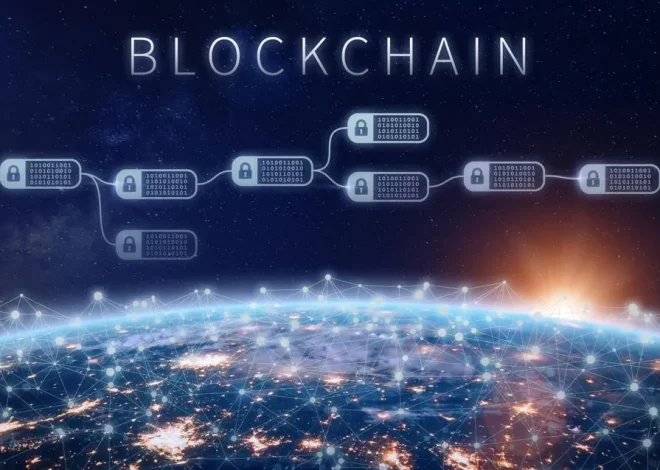
At its simplest, blockchain is a distributed digital ledger. Instead of storing data in one central database, blockchain scatters it across a network of computers known as nodes. Each time new information—such as a transaction or a contract—is added, it is grouped into a “block,” cryptographically sealed, and linked to the preceding block, forming a secure chain of records.
Unlike conventional systems where a single authority can modify data at will, blockchain’s design ensures that no one entity holds ultimate control. This makes it exceptionally resilient to tampering, fraud, or censorship.
The core characteristics that define blockchain include:
-
Decentralization: Power is distributed, not concentrated. No single entity can rewrite the ledger’s history.
-
Immutability: Once recorded, data on the blockchain is virtually irreversible, preserving the integrity of the system.
-
Transparency: Anyone can view transactions on a public blockchain, creating a level of openness rarely matched by traditional institutions.
-
Security: Sophisticated cryptographic techniques protect data, while consensus mechanisms ensure the network agrees on what is true.
From Bitcoin to Broader Horizons
Blockchain first captured the world’s imagination through Bitcoin, the pioneering cryptocurrency launched in 2009. Bitcoin’s elegant solution to the double-spending problem—using a blockchain to track every coin’s ownership without needing a trusted intermediary—showcased the transformative potential of distributed trust.
However, the technology’s promise did not stop at digital money. The creation of Ethereum in 2015 pushed blockchain into an entirely new realm by introducing smart contracts—self-executing programs that automatically enforce the terms of an agreement. With smart contracts, blockchain became not just a record-keeping tool but an engine for decentralized applications that could disrupt industries from finance to art.
Real-World Applications: Blockchain’s Expanding Footprint
Today, blockchain’s practical applications extend well beyond cryptocurrencies. Around the globe, visionary thinkers and builders are applying its principles to solve real-world problems once deemed insurmountable.
Key industries where blockchain is making an impact include:
-
Supply Chain Management: By tracing a product’s journey from source to shelf, blockchain helps verify authenticity and ethical sourcing—whether it’s diamonds, seafood, or pharmaceuticals.
-
Financial Services: Cross-border payments, decentralized finance (DeFi), and tokenized assets all promise faster, cheaper, and more inclusive financial ecosystems.
-
Healthcare: Blockchain can securely store patient records, enabling individuals to control their medical data while ensuring it is easily shareable with trusted providers.
-
Digital Identity: Blockchain offers the possibility of self-sovereign identity, where individuals own and manage their personal credentials without relying on centralized authorities.
-
Intellectual Property and Art: Through non-fungible tokens (NFTs) and digital rights management, blockchain empowers creators to prove ownership and receive royalties automatically.
Why Blockchain Matters: Rethinking the Social Contract
So, why does blockchain capture such enduring fascination? The answer lies in its radical approach to a timeless problem: how do we trust what we cannot see?
By replacing intermediaries with verifiable code, blockchain offers a new social contract—one where rules are enforced not by institutional decree but by cryptographic consensus. In doing so, it promises:
-
Democratization: Anyone with an internet connection can participate in a blockchain network, removing barriers imposed by geography or centralized gatekeepers.
-
Resilience: Distributed networks are harder to hack or shut down than centralized databases.
-
Efficiency: Automated smart contracts can cut out costly middlemen, streamlining transactions and business processes.
-
Accountability: An open ledger ensures that actions and agreements can be verified independently.
Challenges: The Roadblocks Ahead
Despite its promise, blockchain is no cure-all. As with any transformative technology, it comes with limitations that demand sober consideration.
Some key challenges include:
-
Scalability: Popular blockchains like Bitcoin and Ethereum struggle to handle large volumes of transactions quickly and cheaply.
-
Energy Consumption: Proof-of-work systems, which secure many blockchains, require massive computational resources—raising concerns about environmental impact.
-
Complexity: For everyday users, blockchain’s technical nature and often cumbersome interfaces remain barriers to mainstream adoption.
-
Regulatory Uncertainty: Governments worldwide are still figuring out how to regulate blockchain-based innovations without stifling progress or enabling misuse.
Innovations on the Horizon
Encouragingly, the blockchain community is not blind to these hurdles. Developers are hard at work refining solutions that promise to make blockchain more scalable, sustainable, and accessible.
For example:
-
Proof-of-Stake: This alternative consensus mechanism drastically reduces energy use compared to proof-of-work mining.
-
Layer 2 Solutions: Networks like the Lightning Network for Bitcoin or rollups for Ethereum enable faster and cheaper transactions by processing them off-chain before final settlement.
-
Interoperability: New protocols aim to connect separate blockchains, allowing data and value to flow freely across different networks.
A Cultural Shift: The Power of a Global Community
Perhaps blockchain’s most underrated impact is cultural. It has given birth to vibrant, global communities driven by ideals of transparency, decentralization, and open-source collaboration. For millions around the world, blockchain represents a quiet rebellion against outdated systems and unchecked power.
In countries facing economic turmoil or political censorship, blockchain can be a lifeline—helping people safeguard assets, resist surveillance, and engage in global markets free from institutional overreach.
Getting Started: How to Approach Blockchain Responsibly
For the curious newcomer, engaging with blockchain should be approached thoughtfully:
-
Do Your Homework: Learn the basics of blockchain, cryptocurrencies, and wallet security before investing money or sharing data.
-
Experiment Cautiously: Start with small transactions on reputable platforms.
-
Stay Updated: Follow trusted sources and communities to keep up with rapid developments.
-
Protect Your Assets: Use hardware wallets and strong passwords; never share private keys.
Conclusion: A New Chapter in the Story of Trust
Blockchain is far more than a buzzword or a get-rich-quick scheme. It is an ambitious attempt to redefine trust in the digital age—an idea that our records, agreements, and exchanges of value can be transparent, tamper-proof, and free from undue control.
Whether blockchain fulfills its grand promise or morphs into something unexpected, its imprint is already undeniable. It challenges us to imagine a world where trust is encoded, verified by many, and accessible to all. For a society hungry for accountability and fairness in an increasingly digital world, this silent revolution may prove to be one of the defining chapters of our time.