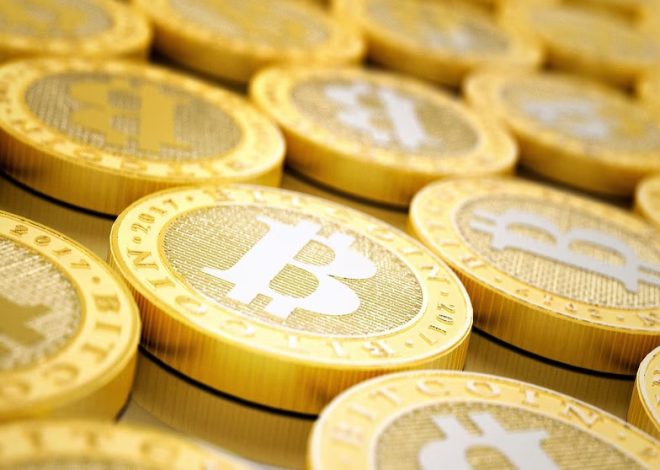
More than a decade ago, an enigmatic figure named Satoshi Nakamoto released a white paper that quietly promised to reshape the global financial system. From that modest origin emerged Bitcoin—a decentralized, peer-to-peer digital currency that has since captured the imagination of investors, economists, and technologists alike. Today, Bitcoin is hailed by some as “digital gold” and dismissed by others as a speculative bubble. Yet, beneath the hype and volatility lies a profound shift in how we think about money, trust, and sovereignty.
The Genesis of Bitcoin
In 2008, amid the wreckage of the global financial crisis, distrust in centralized banking institutions reached a peak. It was in this climate that Nakamoto’s vision took root: a purely peer-to-peer version of electronic cash that would allow payments to be sent directly from one party to another without going through a financial institution. In 2009, the first block—the so-called “genesis block”—was mined, and Bitcoin’s network began its journey.
The brilliance of Bitcoin lies in its elegant solution to the double-spending problem, a longstanding hurdle in digital currencies. By combining cryptographic proof with a decentralized ledger called the blockchain, Bitcoin ensures that transactions are transparent, secure, and irreversible.
How Bitcoin Works
At its core, Bitcoin operates on three foundational pillars:
Blockchain Technology: A distributed ledger that records every transaction ever made. Each block contains a batch of transactions, cryptographically linked to the previous one, forming an immutable chain.
Decentralization: Unlike traditional currencies controlled by central banks, Bitcoin is maintained by a network of nodes and miners spread across the globe. No single entity governs it.
Proof of Work: Bitcoin’s security relies on a consensus mechanism called Proof of Work (PoW). Miners solve complex mathematical problems to validate transactions and add new blocks to the chain, earning Bitcoin as a reward.
These elements together enable Bitcoin to function as a trustless system—users don’t need to rely on intermediaries or governments to transfer value.
Bitcoin as a Store of Value
One of the most compelling narratives around Bitcoin is its emerging role as a hedge against inflation—often likened to gold. With only 21 million coins ever to be mined, Bitcoin introduces digital scarcity in a world of limitless fiat money printing.
Institutional investors, once skeptical, now increasingly allocate a portion of their portfolios to Bitcoin, viewing it as a hedge against economic uncertainty. Countries grappling with hyperinflation have seen citizens turn to Bitcoin to preserve wealth, bypass capital controls, or send remittances cheaply.
The Volatility Conundrum
However, Bitcoin’s journey is not without turbulence. Its price swings can be dramatic, sometimes surging or plummeting by double digits within days. Critics argue that this volatility undermines its viability as a medium of exchange. Proponents counter that volatility is a natural phase for any nascent asset class, particularly one still discovering its role in the financial ecosystem.
Key Advantages of Bitcoin
Bitcoin’s disruptive power lies in its unique features:
Borderless Transactions: Send money across the world in minutes, bypassing traditional banks.
Limited Supply: Unlike fiat currencies, Bitcoin’s supply is capped, protecting it from inflationary erosion.
Transparency and Security: The public ledger is auditable by anyone, ensuring trust through code rather than institutions.
Financial Inclusion: Bitcoin provides access to financial services for unbanked populations, empowering individuals in countries with unstable currencies or restrictive regimes.
Challenges and Criticisms
Despite its promise, Bitcoin faces formidable challenges:
Environmental Concerns: Mining consumes significant energy, raising concerns about sustainability.
Regulatory Uncertainty: Governments worldwide grapple with how to classify, tax, and regulate Bitcoin, creating an unpredictable landscape.
Scalability: Bitcoin’s network processes far fewer transactions per second compared to centralized payment systems like Visa or Mastercard, sparking debates about how to scale without compromising security.
The Road Ahead: Evolution or Revolution?
What does the future hold for Bitcoin? Some envision a world where Bitcoin coexists with traditional currencies, serving as a global reserve asset immune to political whims. Others foresee technological advancements—such as the Lightning Network—enabling faster and cheaper transactions, broadening Bitcoin’s utility as everyday money.
Meanwhile, central banks experiment with their own digital currencies, and competing blockchains emerge with different trade-offs in speed, scalability, and governance. Yet, despite waves of competition, Bitcoin’s first-mover advantage and robust network effect continue to sustain its position at the forefront of the crypto sphere.
Conclusion: Bitcoin’s Enduring Allure
Bitcoin is more than just a currency; it is an idea—a radical experiment in trust, freedom, and decentralization. It challenges the monopoly of state-backed money and invites us to rethink our relationship with wealth in an increasingly digital age.
Whether one views it as an asset, a speculative tool, or a liberating force, Bitcoin has indisputably carved out a unique niche in modern finance. Its story is still unfolding, driven by a passionate community, relentless innovation, and an ever-changing global landscape.
As Bitcoin continues to defy expectations and provoke debate, it reminds us that sometimes, the most powerful revolutions begin not with governments or corporations, but with lines of code, freely shared, in the hands of ordinary people hungry for change.