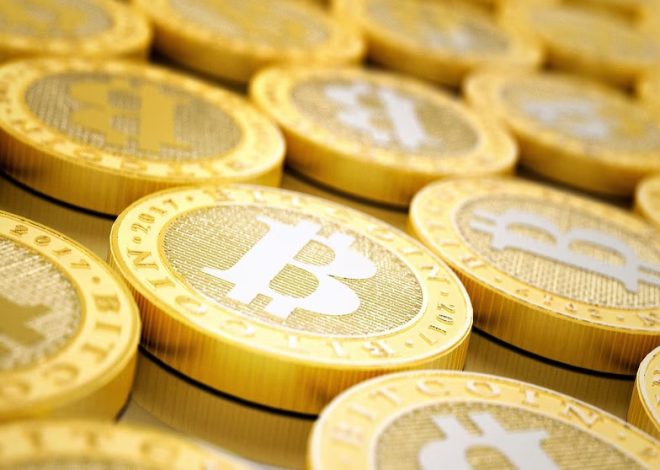
Bitcoin: The Decentralized Revolution Transforming Global Finance
Introduction: A New Dawn for Money
When Bitcoin first emerged in 2009, it was little more than a curiosity—an abstract experiment in cryptography and digital trust. Few could have foreseen that this open-source code, crafted by the elusive Satoshi Nakamoto, would ignite a financial revolution. Over a decade later, Bitcoin is no longer just a niche interest of tech enthusiasts but a disruptive force that challenges traditional notions of money, ownership, and economic sovereignty
The Origins of Bitcoin
To understand Bitcoin’s allure, one must revisit its origins. Born in the shadow of the 2008 global financial crisis, Bitcoin was conceived as a direct response to the fragility of centralized banking systems. Nakamoto’s white paper, Bitcoin: A Peer-to-Peer Electronic Cash System, laid out a blueprint for a decentralized network where transactions could occur securely without the need for banks or middlemen. The concept was radical—trust would reside not in institutions but in mathematics and open-source code
At its heart, Bitcoin solved the long-standing “double-spending problem” that had plagued previous attempts at digital money. Through blockchain technology—a transparent, immutable ledger shared across a network of computers—Bitcoin created digital scarcity for the first time
How Bitcoin Works: The Technology Explained
Bitcoin’s functionality rests on three foundational pillars
-
Blockchain: The blockchain acts as a distributed ledger, recording every transaction ever made. Each block contains a collection of transactions, linked in chronological order, forming an unbreakable chain. This transparency ensures that the network remains tamper-proof and auditable by anyone
-
Mining and Proof of Work: To validate transactions and secure the network, Bitcoin uses a consensus mechanism known as Proof of Work. Miners solve complex mathematical puzzles to add new blocks to the blockchain. This process requires significant computational power, making it prohibitively expensive to attack the network
-
Decentralization: Unlike fiat currencies controlled by central banks, Bitcoin is maintained by thousands of independent nodes worldwide. This decentralization ensures no single entity can manipulate its supply or policy
Bitcoin’s Value Proposition
Why has Bitcoin, an intangible string of code, captured the attention of investors, institutions, and entire nations? The answer lies in its unique characteristics
-
Limited Supply: Bitcoin’s supply is capped at 21 million coins. This hard limit creates digital scarcity, similar to precious metals like gold. In an era where central banks can print unlimited fiat currency, Bitcoin’s fixed supply is a compelling hedge against inflation
-
Borderless Transactions: Bitcoin allows users to send money anywhere in the world within minutes, bypassing traditional banks and costly intermediaries. This is particularly powerful for people living under restrictive financial regimes or those without access to banking infrastructure
-
Censorship Resistance: No central authority can freeze a Bitcoin wallet or block a transaction. This feature grants individuals unprecedented control over their wealth, especially in regions with unstable governments or hyperinflation
A Store of Value or a Medium of Exchange?
One of the most debated aspects of Bitcoin is its true purpose. Is it digital gold—a store of value—or should it function as everyday money? Bitcoin’s volatility often undermines its role as a stable medium of exchange, yet its potential as a store of value has found increasing acceptance
Institutional adoption has played a significant role in solidifying this narrative. Companies like Tesla and MicroStrategy have added Bitcoin to their balance sheets. Meanwhile, financial giants such as Fidelity and BlackRock now offer Bitcoin-related investment products, signaling growing confidence in its long-term relevance
Challenges and Controversies
Despite its promise, Bitcoin is not without its flaws and detractors
-
Environmental Impact: Bitcoin mining consumes vast amounts of electricity, sparking debates about its environmental sustainability. Critics argue that the energy cost is too high for what they see as speculative value. Supporters counter that a significant portion of mining uses renewable energy and that Bitcoin’s energy usage should be weighed against the carbon footprint of the traditional banking system
-
Regulatory Scrutiny: Governments worldwide are grappling with how to regulate Bitcoin. Some countries, like El Salvador, have embraced it as legal tender. Others, such as China, have imposed outright bans on mining and trading. This patchwork of regulations creates uncertainty for investors and developers alike
-
Scalability: Bitcoin’s transaction speed and fees remain a challenge. The network can handle about seven transactions per second—minuscule compared to Visa’s thousands. Innovations like the Lightning Network aim to solve this by enabling off-chain transactions, but widespread adoption remains a work in progress
The Societal Impact of Bitcoin
Beyond technology and markets, Bitcoin represents a cultural and philosophical shift. It challenges the monopoly of states over money, offering an alternative that is transparent, borderless, and resistant to censorship. For citizens in countries plagued by hyperinflation or oppressive regimes, Bitcoin can mean financial survival and freedom
It has also inspired an entire ecosystem of decentralized finance (DeFi) and alternative cryptocurrencies, each experimenting with new governance models, privacy features, and utility. Whether these innovations will complement or compete with Bitcoin remains to be seen, but they underscore the profound influence of Bitcoin’s underlying ideas
The Road Ahead
Where does Bitcoin go from here? Its future is still an open question. Will it become a widely accepted global reserve asset, a digital parallel to gold? Or will it evolve into a mainstream medium of exchange through technological upgrades and greater adoption?
Institutional acceptance continues to grow, and each market cycle brings new waves of investors. Yet Bitcoin’s volatility, energy demands, and regulatory hurdles remain formidable challenges. The community’s response—through technological innovation, advocacy, and decentralized governance—will determine whether Bitcoin fulfills its revolutionary promise or remains a niche asset for speculators
Conclusion: The Legacy of a Decentralized Dream
Bitcoin’s journey is far from over. What began as an obscure experiment in digital money has grown into a powerful symbol of technological defiance and economic freedom. Whether you see it as a speculative asset, a technological marvel, or a flawed ideal, Bitcoin forces us to confront fundamental questions about trust, sovereignty, and the very nature of money
In a world increasingly defined by digital interactions and centralized control, Bitcoin’s greatest legacy may not be the coins themselves, but the movement it inspired—a movement that reminds us that, sometimes, trust is best placed not in people or institutions, but in open code and the collective will of a global network